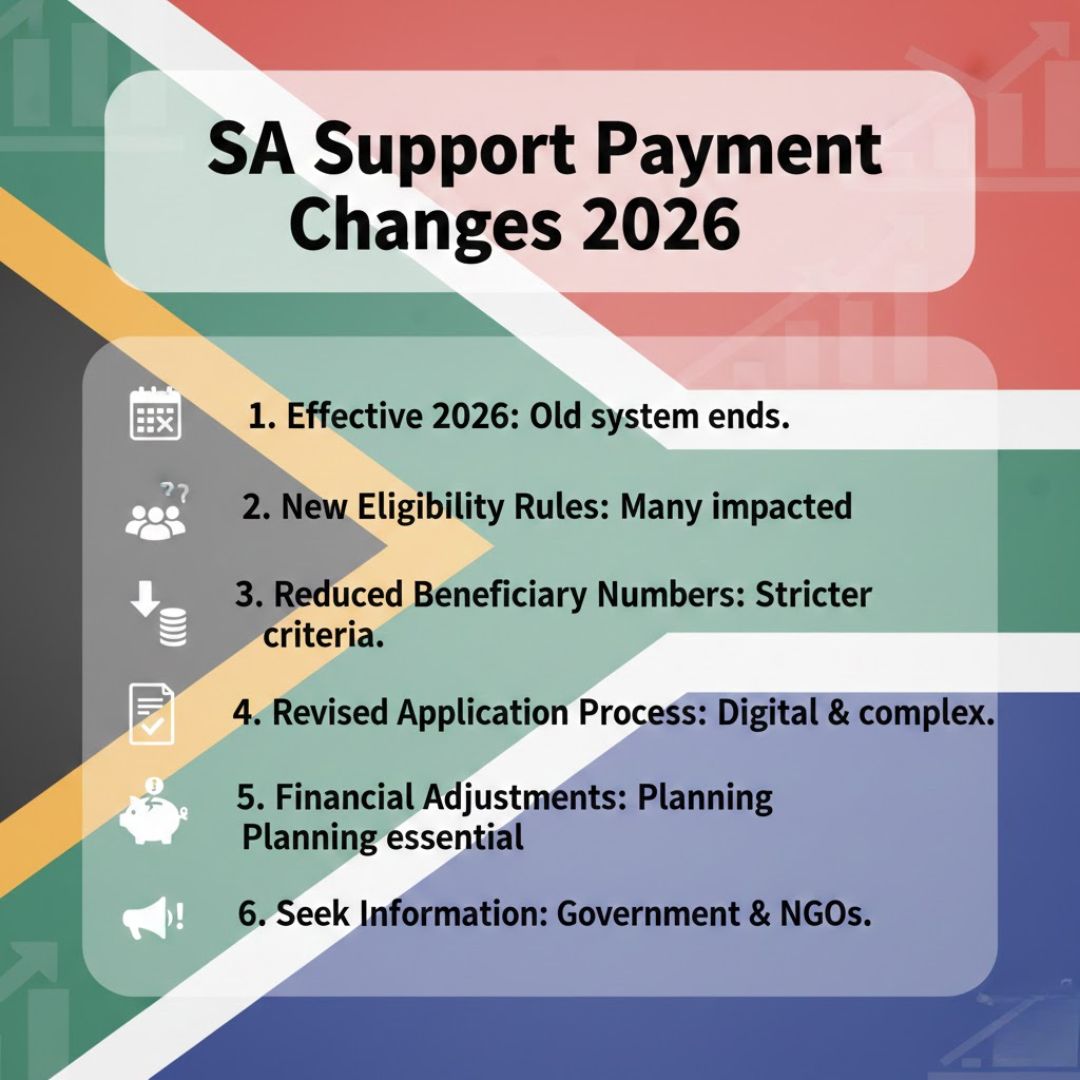
In South Africa, familiar social support payments that millions depend on are facing significant changes as new claim rules roll out in 2026. These updates affect how grants are claimed, reviewed, and continued, leaving many beneficiaries reassessing their eligibility and paperwork. While the government says the reforms aim to improve fairness and efficiency, the shift marks a clear departure from long-standing systems. For households relying on state assistance, understanding what’s changing is now essential to avoid interruptions and adjust smoothly.

Goodbye to Support Payments as 2026 Claim Rules Tighten
The revised framework introduces stricter controls designed to reduce errors and misuse of public funds. Beneficiaries will notice tighter eligibility screening and updated income verification processes that rely more heavily on linked data systems. This means changes in earnings or household status can be flagged quickly. While authorities highlight improved payment accuracy as a key benefit, some recipients worry about reduced flexibility margins that previously helped during short-term hardship. Adapting early and keeping records current will be critical under the new approach.

South Africa’s New Claim Rules Reshape Grant Eligibility
Eligibility is being recalibrated to better reflect economic realities, but that also narrows access for certain groups. Applicants must meet revised means thresholds that are assessed more frequently than before. The system now leans on real-time data checks, reducing delays but increasing the risk of sudden adjustments. Officials argue this creates fairer resource allocation, yet advocacy groups caution about income fluctuation risks for informal workers. Clear communication and timely updates from claimants will play a major role in maintaining continuity.
 SASSA February 2026 Payment Update Lists R560 and R1,250 Grants Paid on 17 February - Track Yours
Adjusting to 2026 Support Payment Changes in South Africa
Beyond eligibility, the experience of claiming support is evolving nationwide. Expect streamlined digital processes to replace many in-person steps, aiming to cut waiting times. Notifications are shifting toward automated status updates, which can feel efficient but less personal. To bridge gaps, community assistance centres are expected to help vulnerable groups navigate the system. Planning around fixed payment schedules is also essential, as predictable cycles replace more flexible arrangements of the past.
What These Reforms Mean for Beneficiaries
Overall, the 2026 reforms signal a more data-driven future for social support in South Africa. Success will depend on how well beneficiaries adapt to clear compliance requirements and whether support services remain accessible. The promise of greater system transparency must be matched by practical guidance on the ground. For individuals, early information checks and proactive updates can prevent disruptions. While adjustment may be challenging, the long-term goal is more sustainable assistance for those who need it most.
| Aspect | Before 2026 | From 2026 |
|---|---|---|
| Eligibility Review | Periodic checks | Ongoing assessment |
| Application Method | In-person & online | Mainly digital |
| Income Reporting | Manual updates | Linked data systems |
| Payment Timing | Variable dates | Fixed monthly cycle |
| Support Access | Local offices | Community centres |
Frequently Asked Questions (FAQs)
1. Who needs to reapply under the new rules?
Most existing beneficiaries will be reviewed automatically rather than reapplying.

2. Will grants stop immediately in 2026?
No, changes will be phased in with reviews before any payment stops.
3. Are digital applications compulsory?
Digital claims are preferred, but assisted options remain available.
4. How can beneficiaries avoid payment delays?
Keeping personal and income details updated helps ensure uninterrupted payments.