Homeowners in South Africa are bracing for a major shift as cheap home insurance steadily disappears. From February 2026, premium costs are expected to rise due to growing risk exposure, higher construction expenses, and increased insurer caution. What was once considered a relatively stable household cost is now becoming unpredictable, especially in areas facing crime, extreme weather, or infrastructure strain. For South African property owners, understanding these changes early is key to managing budgets, protecting assets, and avoiding sudden financial pressure when policies renew.

Why Home Insurance Premiums in South Africa Are Increasing
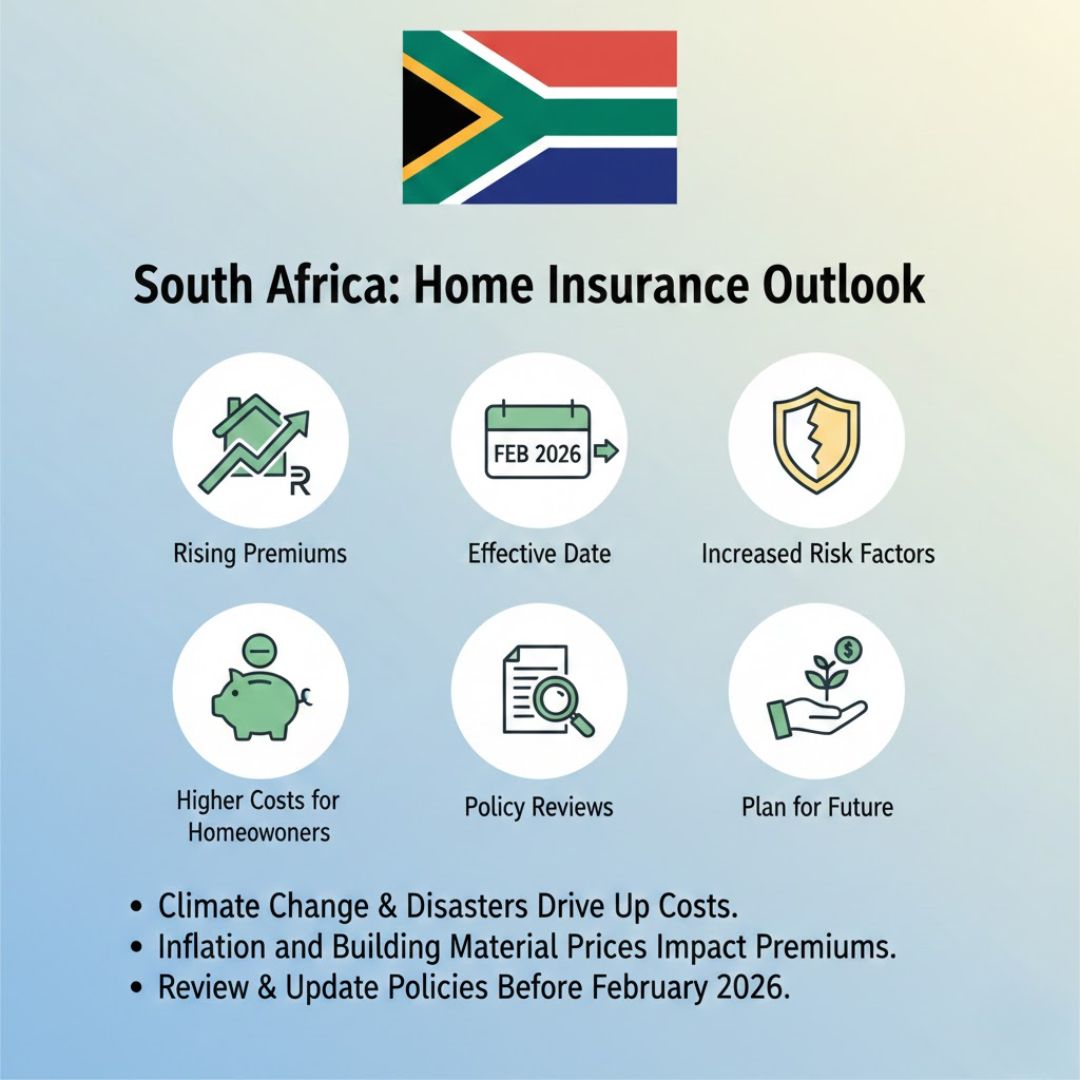
Several forces are pushing home insurance costs upward across South Africa. Insurers are reacting to climate damage risks such as floods, hailstorms, and fires that have caused heavy losses. At the same time, building cost inflation driven by material shortages and labour expenses has raised repair values. Rising crime levels have also contributed to property claim growth, especially for theft and vandalism. Together with insurance risk recalculations, these factors are forcing providers to price policies more cautiously, leaving homeowners to absorb higher premiums.

How Rising Home Insurance Costs Impact Property Owners
Higher premiums affect more than just insurance bills—they influence overall household finances. Many families are facing monthly budget strain as insurance joins electricity and bond repayments in rising costs. Some homeowners may opt for lower coverage options to manage expenses, while others choose increased excess payments to keep premiums affordable. However, this can increase financial risk during claims. There is also growing concern over renewal cost surprises, making it essential for homeowners to review policies well before renewal dates.
 Goodbye to Old Pension Schemes: Legacy Benefits Reviewed Under New National Rules February 2026
How South African Homeowners Can Manage Higher Premiums
While premium increases may be unavoidable, homeowners still have ways to reduce their impact. Regular policy reviews support smarter cover decisions and prevent over-insurance. Security upgrades like alarms or tracking systems can unlock home security discounts with certain insurers. Comparing providers allows for competitive pricing checks, as insurers assess risk differently. Maintaining a clean claims record also helps with future premium stability. Small proactive steps today can make a noticeable difference as 2026 approaches.
Overall Outlook for Home Insurance in 2026
The end of cheap home insurance reflects a broader shift in South Africa’s risk and cost landscape. With insurers prioritising sustainability, homeowners must adopt a long-term planning approach rather than relying on past pricing trends. Staying informed, reassessing cover needs, and making strategic adjustments can reduce financial shock. While premiums are rising, informed choices and responsible risk management can help homeowners protect both their property and financial well-being.
| Key Factor | Effect on Premiums | Homeowner Response |
|---|---|---|
| Extreme Weather | Higher risk loading | Improve property resilience |
| Construction Costs | Increased insured value | Review rebuild estimates |
| Crime Levels | Security-based pricing | Install security systems |
| Claims History | Adjusted premium rates | Limit minor claims |
| Policy Excess | Lower annual premiums | Choose affordable excess |
Frequently Asked Questions (FAQs)
1. Why are home insurance premiums rising in South Africa?
Premiums are increasing due to higher crime, climate risks, and rising repair costs.
 Goodbye to Pension Payment Confusion: Revised Welfare Payment Schedules Start Mid February 2026
2. Will all South African homeowners be affected?
Most homeowners will see increases, though the impact varies by location and risk profile.
3. Can improving home security reduce premiums?
Yes, many insurers offer discounts for approved security upgrades.
4. Is switching insurers worth considering?
Comparing insurers can help identify better pricing or more suitable coverage.