South Africa is rolling out a major welfare reform that will reshape how social assistance is distributed nationwide. From 8 February 2026, beneficiaries will no longer be allowed to receive more than one social grant at the same time. The new one-grant-per-person policy is designed to tighten oversight, reduce misuse, and ensure fairer access to limited public funds. While the change aims to strengthen the social security system, it also raises important questions for households that previously relied on multiple grants to meet basic needs.

South Africa’s One-Grant-Per-Person Rule Explained
The new policy means each beneficiary in South Africa can only receive one form of social assistance at any given time. Authorities say the rule closes loopholes that allowed overlapping benefits and improves system-wide fairness across the welfare system. For many recipients, this brings a major eligibility shift that requires careful review of current grant arrangements. Officials argue the reform supports targeted financial support by prioritising those most in need. However, families with complex circumstances may feel short-term pressure as they adjust. The government has emphasised administrative clarity and better data matching to avoid errors, while also promising transparent enforcement as the policy takes effect.

How the Single-Grant Policy Affects Beneficiaries
For beneficiaries, the biggest impact is deciding which grant best suits their situation under the new rules. Those previously receiving multiple payments must now make choices that affect household budgets. The reform encourages responsible grant selection and pushes applicants to reassess their eligibility. Officials believe this will lead to fairer resource sharing across communities. Still, advocacy groups warn about income gap risks for vulnerable households during the transition. To address concerns, agencies plan to offer guidance and improved communication, aiming for clear beneficiary guidance rather than sudden cut-offs.

Why South Africa Is Enforcing Grant Limit Changes
Government leaders say the reform is driven by sustainability concerns and rising demand for social assistance. By limiting payments to one grant per person, the state hopes to strengthen long-term fiscal balance and reduce administrative strain. The move also supports fraud prevention efforts by simplifying monitoring systems. Policymakers argue this approach improves equitable grant access and ensures funds reach first-time applicants. While the policy may feel strict, officials stress that national budget pressure makes reform unavoidable if social programmes are to remain viable.
Policy Impact and What Comes Next
As the February 2026 start date approaches, beneficiaries are encouraged to review their grant status early and seek official advice if unsure. The success of the reform will depend on smooth policy rollout and how effectively authorities manage disputes and appeals. Clear communication could ease anxiety and build trust, while poor implementation may fuel confusion. Ultimately, the change reflects evolving welfare priorities as South Africa balances social protection with fiscal responsibility, shaping how assistance is delivered in the years ahead.
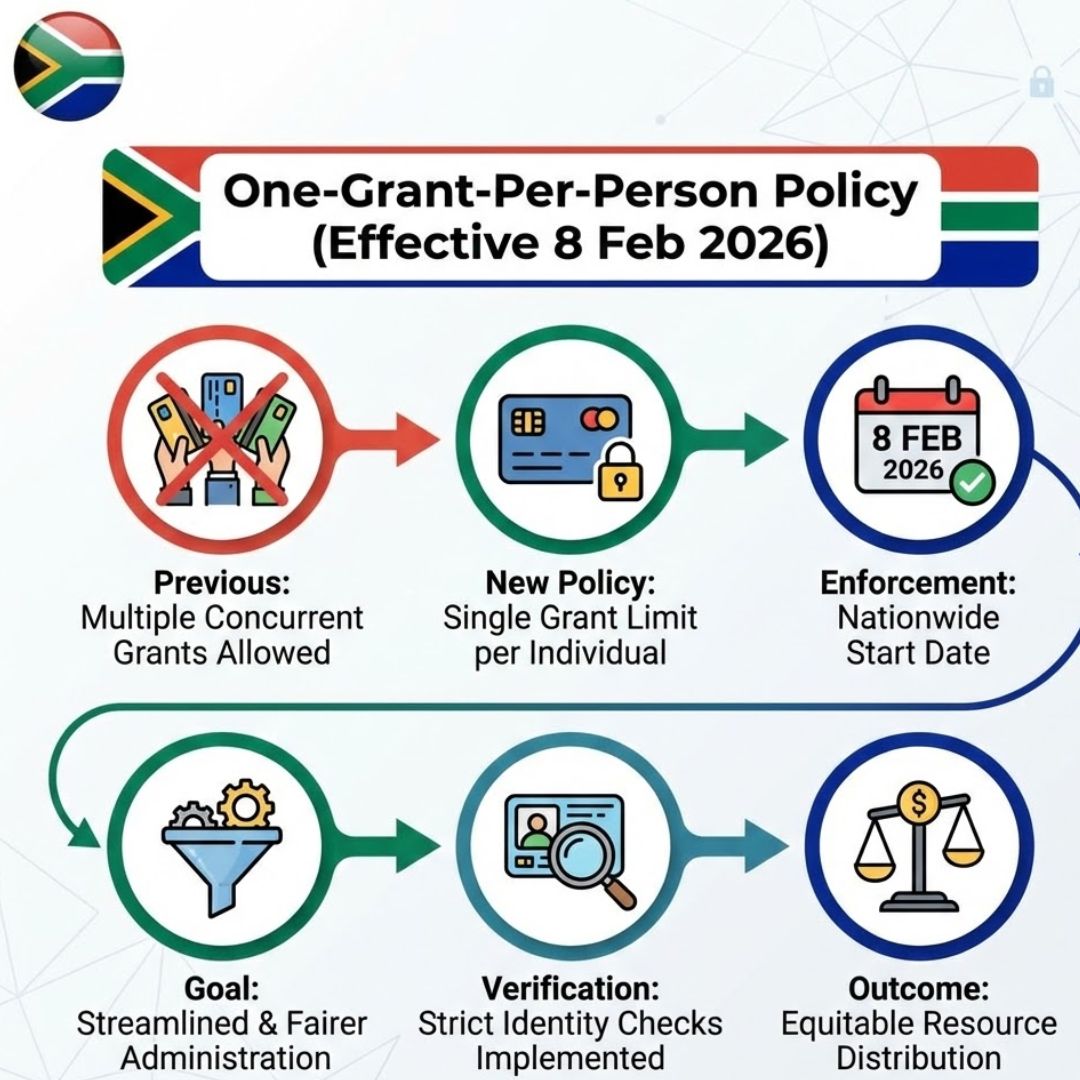
| Grant Aspect | Before Policy | From 8 Feb 2026 |
|---|---|---|
| Number of grants per person | Multiple allowed | One only |
| Eligibility checks | Limited cross-checking | Centralised verification |
| Fraud monitoring | Fragmented systems | Unified oversight |
| Application decisions | Automatic overlaps | Beneficiary choice required |
Frequently Asked Questions (FAQs)
1. When does the one-grant-per-person rule start?
The policy takes effect nationwide from 8 February 2026.
 Smart Speed Cameras: South Africa Starts R2,000 Fines in February 2026 and Drivers Face New Risks
2. Can I choose which grant to keep?
Yes, beneficiaries will need to select the most suitable grant.
3. Will current grants stop automatically?
Authorities will review records before making any changes.
4. Where can I get official guidance?
Grant offices and official government channels will provide support.